
Planning a trip to North Africa comes with a lot of exciting preparation, but dealing with a “closed currency” like the Moroccan Dirham can be a major source of confusion for first-time travelers. You are probably wondering how to pay for things once you land, what cash to bring, and whether your home currency will be accepted.
Can I use US dollars or Euros in Morocco? Yes, you can use US dollars and Euros in major tourist areas, luxury hotels, and some medina shops in Morocco. However, the official currency is the Moroccan Dirham (MAD). Paying in foreign currency usually results in a poor exchange rate, as vendors will round up the conversion in their favor. For the best value, you should always pay in Dirhams.
While bringing foreign cash from home is the best way to prepare for your Moroccan adventure, trying to spend that foreign cash directly on the streets is a mistake that will quickly eat into your budget.
Here is a quick cheat sheet before we dive into the details:
| Payment Method | Best Used For | Where to Avoid |
| Moroccan Dirhams (MAD) | 70% of daily interactions: street food, souks, tips, taxis, local cafes. | Never avoid using Dirhams! It is the official currency. |
| Euros / USD / GBP | Emergency backup, large tour balances, luxury hotels, high-end carpet/leather shops. | Taxis, small medina stalls, daily tips, local restaurants. |
| Credit Cards (Visa/MC) | Pre-booking tours, large supermarkets (Carrefour), modern restaurants, high-end riads. | Small souk purchases, rural areas, tipping guides or drivers. |
The Golden Rule of Moroccan Money: Bring It, Don’t Spend It
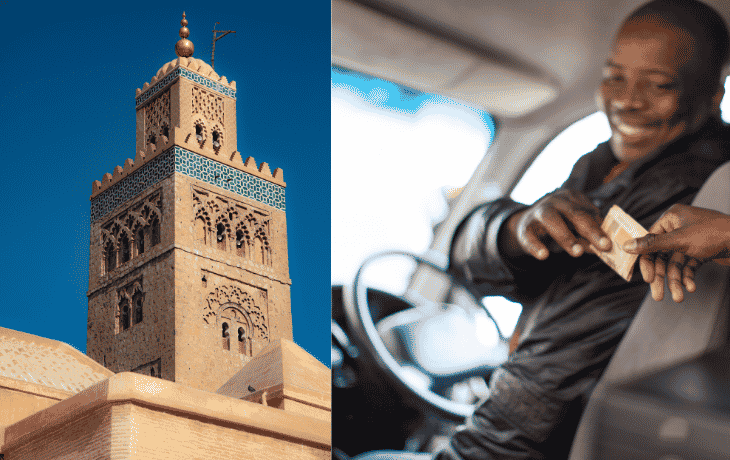
To understand what currency is used in Morocco, you first need to understand the concept of a “Closed Currency.” This means you cannot legally or easily buy or sell Moroccan Dirhams outside of Morocco. Your local bank at home will not have them, and airport exchanges in London or New York will not carry them.
The Strategy: The best approach is to bring crisp, clean US Dollars, Euros, or British Pounds from home. Upon arrival at the airport in Marrakech or Casablanca, or at a local bureau de change in the city center, exchange your foreign cash for Dirhams.
Important Warning: Moroccan exchange bureaus and banks are incredibly strict about the condition of foreign bills. Old, torn, written-on, or heavily creased foreign bills will often be flat-out rejected. Make sure you request crisp, new bills from your bank before flying.
Where You CAN Use Euros and USD (And Where You Can’t)
While the Dirham is king, foreign currency is accepted in specific scenarios. To avoid awkward encounters, it helps to know the clear distinction of where your Euros and Dollars hold power.
Where foreign currency IS accepted:
- High-end riads and large international hotels.
- Private tour companies (like us at Fantastic Morocco Tours!).
- Large, tourist-focused carpet, jewelry, or leather shops in the medinas of Marrakech and Fes.
Where foreign currency is NEVER accepted:
- Petit taxis and Grand taxis (drivers will either flat-out refuse the ride or charge you triple for the inconvenience).
- Street food stalls and local neighborhood cafes.
- Small souk vendors selling spices, cheap souvenirs, or snacks.
- Tips for bellboys, restroom attendants, or street musicians.
The “Rounding Up” Trap: Why Paying in Euros/USD Costs You More
If a large leather shop in the Fes medina offers to let you pay in Euros, why shouldn’t you take them up on the convenience? The answer comes down to math.
When you pay in foreign cash, the vendor has to act as the exchange bureau, and they will always calculate the rate in their favor to cover the hassle of exchanging it later.
For example: If the official exchange rate is roughly 10.5 MAD to 1 EUR, a vendor in the souk will simply calculate it as 10 MAD to 1 EUR to make the math easy for themselves. If you buy a leather bag for 1,000 MAD, they will charge you 100 EUR. However, at the official exchange rate, that bag should only cost you around 95 EUR. Over the course of a 10-day trip, this “convenience fee” eats into how much a trip to Morocco costs significantly.
Credit Cards vs. Cash: The 2026 Reality in Morocco
Morocco is rapidly modernizing, but cash still rules the streets.
Credit Cards: Visa and Mastercard are widely accepted in modern restaurants, large supermarkets (like Carrefour), and mid-to-high-end hotels. However, if the card machine ever asks if you want to be charged in your home currency (USD/EUR) or the local currency (MAD), always select MAD. This is a trap called Dynamic Currency Conversion, and selecting your home currency will hit you with hidden, inflated bank fees. (For more details, check out our guide on paying with credit cards in Morocco).
Cash is King: Be prepared to use cash for about 70% of your daily interactions.
The “Small Change” Rule: Try to break your large 200 MAD bills at supermarkets, pharmacies, or your hotel front desk. Taxi drivers and small street vendors almost never have change for large bills, and presenting one for a 15 MAD taxi ride will cause major frustration. Hoard your 10, 20, and 50 Dirham notes!
ATMs in Morocco: What You Need to Know
If you don’t want to travel with a thick envelope of cash, ATMs are a great alternative.
- Are ATMs common? Yes, they are everywhere in major cities like Marrakech, Casablanca, Rabat, and Fes. However, they are exceedingly rare in rural areas like the High Atlas Mountains or the Sahara Desert. Withdraw what you need before leaving the big cities.
- Withdrawal Limits: Most Moroccan ATMs cap single withdrawals at around 2,000 MAD (roughly $200 USD / €185 EUR) per transaction.
Pro-Tip: Always try to use ATMs that are physically attached to a bank, and preferably during banking hours. On the rare occasion that the machine swallows your card, you can simply walk inside and ask the teller to retrieve it.
Frequently Asked Questions
Should I exchange money before going to Morocco?
No, you cannot. Because the Dirham is a closed currency, you must wait until you land in Morocco to exchange your money. Airport exchange desks are open 24/7 to accommodate international flights.
Can I tip in US Dollars in Morocco?
You can, but it is highly inconvenient for the local worker. If you hand a bellboy a $1 bill, he cannot spend it. He has to take it to an exchange bureau and pay a commission to convert it, rendering the tip almost worthless. Always tip in Dirham coins or small notes.
Are Scottish notes or Australian Dollars accepted?
Generally, no. Exchange bureaus heavily favor major international currencies. Stick to bringing US Dollars, Euros, or British Pounds.
Can I use a travel card like Revolut or Monzo?
Yes! Modern travel cards like Revolut, Monzo, and Wise work perfectly at Moroccan ATMs and card terminals, often providing excellent mid-market exchange rates.
Let Us Handle the Logistics
The best strategy for managing your money in Morocco is a hybrid approach: pre-book your big-ticket items with a credit card, bring a backup stash of crisp USD or Euros for emergencies, and rely on Dirhams for your everyday fun in the souks.
Don’t want to stress about haggling, taxi fares, or finding a safe ATM? Let us handle the logistics.
At Fantastic Morocco Tours, our comprehensive packages mean your accommodation, transportation, and major activities are sorted before you even pack your bags. You can focus entirely on the sights, the culture, and the food, rather than stressing over your wallet.
[Explore our Tour Packages and Contact Us Today!]